
| Why is DT important? | |||
| Our DT curriculum provides pupils with the technical knowledge to design, make and evaluate technical, construction, textile, and food products. This knowledge enables pupils to create a range of functional and appealing products within a range of relevant contexts for identified audiences. | |||
| How is organised? | |||
| Technical | Construction | Textile | Food |
| Knowledge of moving parts and electrical components | Knowledge of cutting, joining and strengthening techniques | Knowledge of different materials, and sewing and weaving techniques. | Knowledge of food hygiene, nutrition, healthy eating, seasonality, affordability and cook techniques. |
| What is taught and in what order? | |||
| Technical | Construction | Textile | Food |
| Pinwheels (axel) - Yr1
Moving Pictures (levers and linkages)* -Yr3 Games with Electrical Components (series circuits, switches, buzzers, bulbs, motors)* – Yr4 Propelled Boats* (rubber bands – motion) – Yr5 |
Viking carts (wheel and axel)* – Yr2
Morrison Shelters* (cutting and joining wood, strengthen corners) – Yr 6 |
Junk Modelling -EYFS
Roman Shields* – Yr1 Weaving Recycled Materials – Yr2 Hand Puppets – Yr3 African Batik – Yr4 Woven Bag – Yr 5 Eco Fashion – Yr6
|
Tasting Healthy Food – EYFS
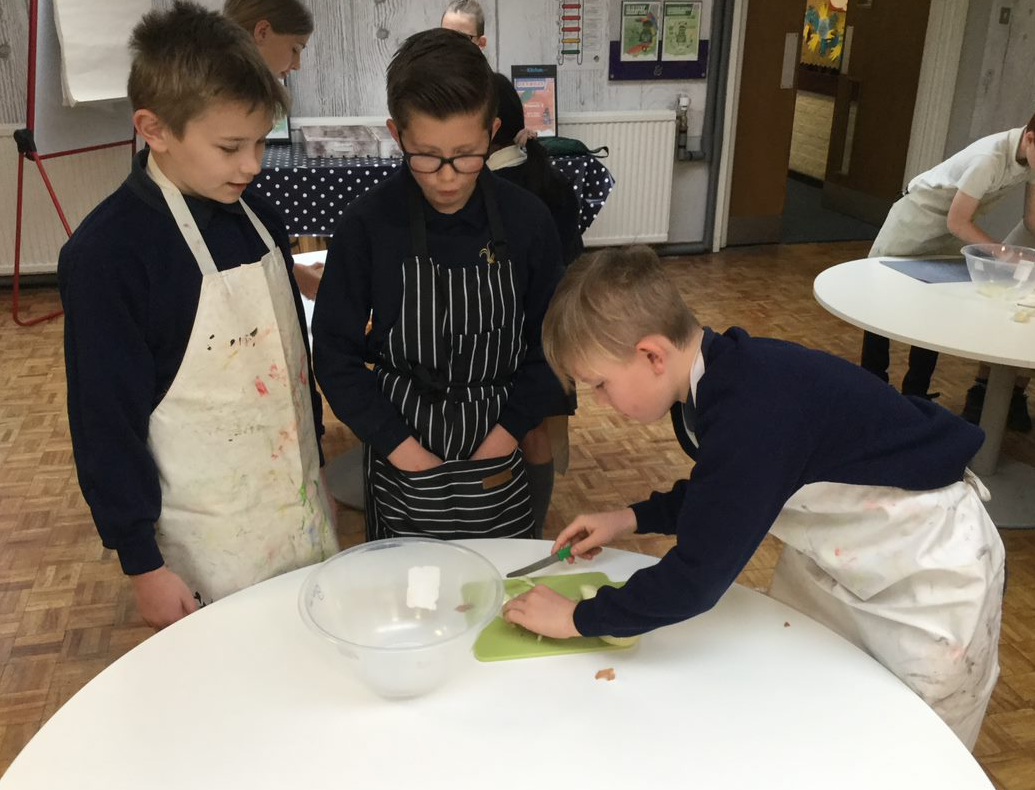
Healthy Wraps (grate, slice, chop) – Yr1 Soup (chop, peel) – Yr2 Pizza and Dough (grate, slice, chop, knead) – Yr3 Potatoes (grate, slice, chop, peel, mash) – Yr4 Indian Food (grate, slice, chop, peel, knead, mash) – Yr5 |
| * denotes a unit which links two or more strands. | |||
| What will this include? What will I see in a lesson? | |||
Designing
Making
Evaluating
Technical Knowledge
|
|||